
What Hiring a Canadian Web Designer Taught My Business About Conversion and Local Trust
Learn how hiring a skilled Canadian Web Designer can help your local business increase leads, streamline checkout, and build trust with customers.

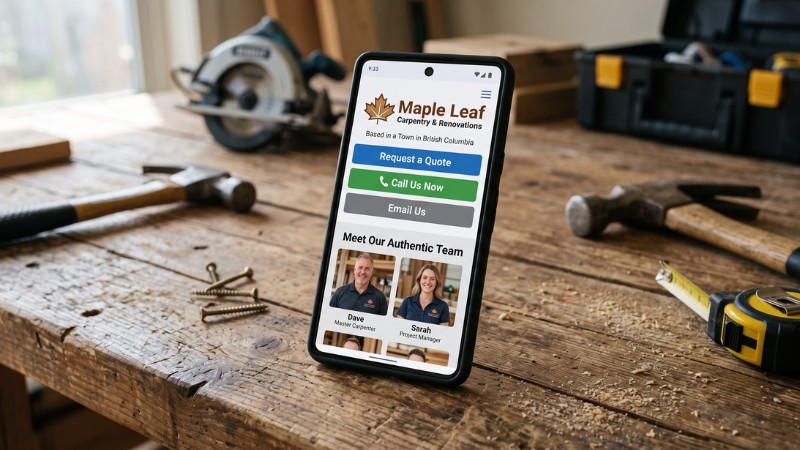
When my buddy Mark called me three winters ago asking why his Calgary plumbing site was not bringing in calls, I gave him the honest truth. He had spent weeks hacking together a generic template that looked pretty, but felt entirely disconnected from his actual business. That was my cue to step in as a Canadian Web Designer and overhaul his online presence from the ground up.
He was relying on a stock photo of a palm tree outside a suburban house, and his quote request form required visitors to select US zip codes. It was a classic example of standard website templates failing local business owners. Over the last decade of building sites for tradespeople, boutique retail shops, and professional services, I have learned that localized web design is less about fancy animations and much more about context.
Your website is not just a digital business card sitting in a corner of the internet. It is an active sales tool that needs to talk to real people living in specific towns, dealing with real local problems. Let us break down what actually goes into making a website convert local customers, and why off the shelf templates so often fall short.
Why Generic Templates Fail Local Businesses
Most popular website builders are created with a massive, generic market in mind. They give you sleek layouts, but they omit the granular features that small service businesses rely on every single day. If you operate an auto repair shop in Halifax or a commercial cleaning firm in Mississauga, your clients care about immediate clarity, transparent booking, and localized trust.
I often see business owners spend thousands of dollars on beautiful designs that utterly fail to convert traffic into phone calls. Why does this happen? Usually, it is because the navigation hides the phone number, or the contact form asks for too much unnecessary information upfront. A visitor looking for emergency furnace repair at eight on a Tuesday evening does not want to fill out a ten field survey. They want a big, tap to call button at the top of their phone screen.
Another huge issue is tax and shipping complexity for small e-commerce stores. Setting up a store that properly calculates HST, GST, and PST across different provinces can turn into an absolute nightmare if your platform is built for a single flat tax rate. When you work with an experienced Canadian Web Designer, they will make sure those backend logistics are completely dialed in before you launch.
What a Skilled Canadian Web Designer Actually Brings to the Table
Beyond fixing basic layout issues, hiring a dedicated Canadian Web Designer means you are getting someone who understands the local commerce ecosystem. We know how buyers think, how they pay, and what subtle cues make them trust a brand online. It comes down to nuance, context, and practical functionality.
Navigating Local Payment Systems and Currency Expectations
If you run an online shop or take deposits for services, clear currency indicators are non-negotiable. Local shoppers hate getting to a checkout page only to realize the prices were listed in US dollars all along. It creates instant cart abandonment and leaves a sour taste in the customer’s mouth.
Also, offering Interac e-Transfer as a payment option for high-ticket service contracts or custom orders can save small business owners hundreds of dollars in credit card processing fees every month. A localized designer knows how to build manual payment workflows into your checkout process effortlessly. It makes buying seamless for local clients while keeping extra margin in your pocket.
The Subtle Art of Local Trust Signals
Trust is built in the tiny details that most template creators overlook completely. Displaying local addresses, using authentic photos of your actual team instead of polished stock models, and highlighting community involvement makes an immediate impression. When visitors see a photo of your service van parked outside a recognizable local landmark, their guards drop.
Additionally, any seasoned Canadian Web Designer knows that local shoppers look for explicit operational badges. Mentioning local ownership, displaying provincial trade certifications, and clearly outlining shipping or service boundaries builds instant credibility. These trust triggers convert casual visitors into paying customers far better than flashy graphic effects ever could.
Case Study: Turning Around a Local Trades Website
Let us look at a real example from a project I took on last year. A mid-sized roofing contractor in Alberta was getting roughly twelve hundred visits a month to their website, but they were receiving fewer than five contact form submissions per month. They were convinced they had a traffic problem and were ready to pour thousands of dollars into paid ad campaigns.
When I audited their site, the issues were immediately obvious. Their site took over six seconds to load on mobile devices because of massive, uncompressed header images. Worse, their primary call to action button led to a broken third-party booking widget that did not render properly on smartphones.
We stripped away the clutter and rebuilt the layout from scratch. We put a sticky call bar at the bottom of mobile screens, simplified the contact form down to four fields, and added authentic photos of their crew working on local homes. We also created specialized landing pages for seasonal services, emphasizing emergency winter ice dam removal alongside summer roof replacements.
The results were dramatic and immediate. Without spending a single extra dollar on paid advertising, their monthly leads jumped from five to thirty-eight within ninety days. By focusing on site speed, mobile usability, and local relevance, we transformed an expensive digital paperweight into their best-performing salesperson.
Key Design Elements Every Small Business Site Needs
If you are planning a website redesign this year, there are several foundational elements you should insist on regardless of your industry. First, your site must load in under two seconds on an average mobile connection. Mobile users are remarkably impatient, and if your page lags, they will instantly hit the back button and go to your direct competitor.
Second, make your contact information unmissable. Place your phone number and email address in the top header on desktop, and use a sticky contact bar on mobile devices. If a client has to click through three separate pages just to figure out how to reach you, your user experience is broken.
Third, craft your copy around customer pain points rather than listing your qualifications. Instead of leading with a paragraph about how long you have been in business, explain exactly how you solve your client’s immediate problem. A good Canadian Web Designer will explain that your design needs to showcase customer outcomes above everything else.
Finally, optimize your service pages for specific geographic areas. If you serve multiple nearby towns, create dedicated, content-rich pages for each location rather than stuffing twenty town names into a single footer paragraph. This approach improves your local search engine rankings while reassuring clients that you actually cover their specific neighborhood.
How to Choose the Right Partner for Your Website Project
Finding a reliable Canadian Web Designer can feel like searching for a needle in a haystack. There are thousands of freelancers and agencies competing for your business, ranging from high-end firms charging tens of thousands to offshore agencies offering bargain-basement rates. Finding the sweet spot requires asking the right questions before signing any contracts.
Start by looking at their recent portfolio projects. Are the sites fast, easy to navigate, and clearly built for conversion? Reach out to a couple of their past clients and ask about their experience. Did the designer deliver on time, stay within budget, and offer ongoing support after launch?
Be wary of designers who focus purely on aesthetics while ignoring copy, search engine structure, and conversion strategy. A beautiful site that nobody finds is completely useless to your bottom line. Look for a partner who takes time to understand your business model, customer acquisition costs, and long-term growth goals.
Sitting down with a Canadian Web Designer who gets your specific industry realities will save you hundreds of hours of frustration down the road. They will keep your project on schedule, ensure your site complies with privacy regulations, and give you a digital foundation that grows alongside your business.
Taking the Next Step With Your Website
Your website is often the very first interaction a prospective client has with your brand. If it feels outdated, slow, or confusing, you are handing money directly to your competitors. Investing in a clean, high-performing digital platform is one of the smartest moves you can make for your business this year.
Take twenty minutes today to review your current site on your smartphone. Test the contact forms, click the phone numbers, and read your homepage text through the eyes of a first-time visitor. If you spot friction, it is time to make a change and build a site that truly serves your business.
0 Comments